
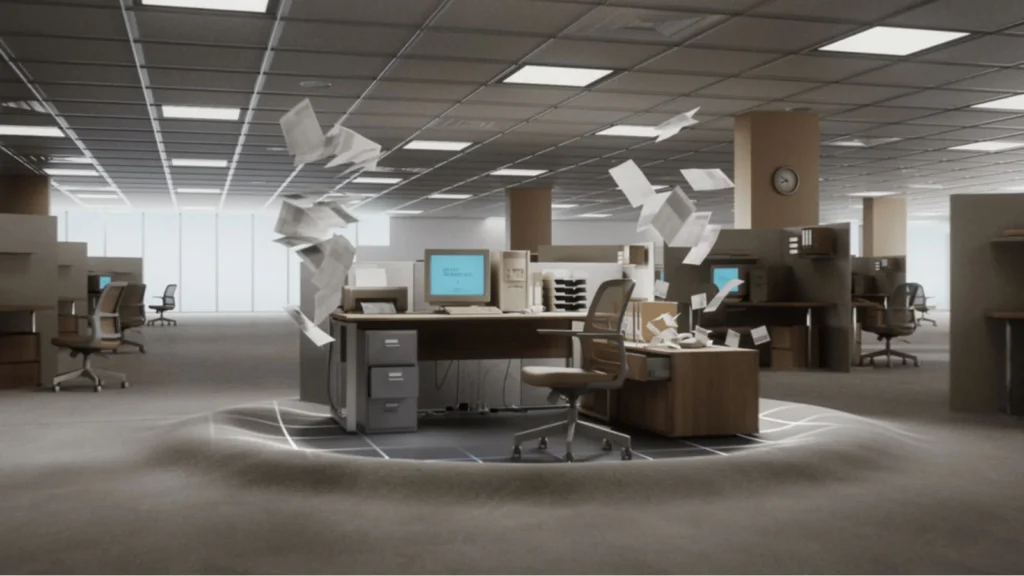
Imagine an orchestra rehearsing in one room while you are trying to wrap up a meeting with a potential client. Could be traumatizing, right? That’s the everyday challenge for many in bustling workplaces where meeting room acoustics are poor, and noisy adjacent spaces disrupt the tranquillity and efficiency of meetings.
It is common for meetings to have faint chatter from the neighbouring room, or worse, a sudden burst of laughter echoing through thin walls. We’ve all been there. In today’s busy work environments, the challenge of maintaining acoustic privacy and focus within corporate meeting spaces is more pressing than ever. That’s why office noise control and addressing sound intrusion in meetings are vital for productivity.
At Acorp, where we believe in transforming the workplace without disrupting the vision of organizations, we explored the nuances of how sound travels within these spaces. Here are a few of our office acoustic solutions and recommendations for clients to help them reduce meeting room noise and create effective environments for collaboration.
- Acoustic Design Solutions: Imagine installing acoustic treatments for offices like PET panels, fabric panels, acoustic tiles, and carpets with higher ounce in the meeting rooms. These materials reduce echoes and noises by absorption, improving balanced acoustic design office setups and making conversations clearer.
- Soundproofing Techniques: Consider using thicker curtains or weather stripping around doors and windows to block noise. Double-glazed partitions (DGU) and higher-density insulation materials inside drywall partitions are excellent for meeting room soundproofing. These methods support soundproof meeting room design to keep outside sounds from disrupting meetings.
- Room Configuration: Changing how furniture is arranged or using room dividers can alter how sound travels. For example, placing bookshelves or plants strategically can absorb noise, providing simple noise control measures that improve comfort and help reduce meeting room noise.
- Technological Integration: Think about using devices that create white noise to mask other sounds. Sound masking in offices through dedicated systems or speakers that emit soothing sounds, or installing noise-cancelling systems, can greatly enhance meeting room acoustics.
- Adaptation to Work Culture: With open-plan offices becoming more common, incorporating soundproofing materials into cubicles or pods can help maintain a quieter atmosphere. Adjustable sound barriers, ceiling-hung baffles, and acoustical privacy screens also absorb sound effectively, supporting healthier office acoustic solutions.
- Budgetary Considerations: Organizations on a budget might focus on simple changes, such as thicker carpets or strategic soundproof panels on certain walls. Even cost-effective solutions like these contribute to productivity-enhancing office design and more effective meeting room soundproofing.
We came across studies that clearly show how office noise control impacts focus and employee well-being. Cutting disruptions matters big time for better meetings and overall productivity.
According to a study conducted by the World Health Organization, excessive noise can decrease productivity by 10%. Moreover, a report by the Journal of Applied Psychology mentioned that “disruptions could cost up to 86 minutes of work per employee per day.”Similarly, multiple insights by Forbes and Harvard Business Review highlight the importance of addressing sound intrusion in meetings and designing spaces that actively reduce meeting room noise