
We’ve all been there. It’s 3:00 PM, you’re on your fourth cup of coffee, and the office fluorescent lights are starting to feel like a personal attack on your retinas. You feel sluggish, your eyes are straining, and that “to-do” list looks more like a “not-today” list.
What if the solution wasn’t more caffeine, but a better lightbulb?
Often overlooked, the color temperature of your workspace is one of the most significant factors in your daily performance.
Today, we’re diving deep into why Natural White light is the undisputed champion of productivity and how it can transform your workday from a grind into a flow state.
What exactly is “Natural White” Light?
Before we talk about benefits, let’s talk about science. Light is measured on the Kelvin (K) scale.
• Warm White (2700K – 3000K): Think cozy living rooms and candlelit dinners. Great for relaxing, terrible for focusing.
• Cool White / Daylight (5000K – 6500K): Very blue-toned and intense. Good for high-detail tasks, but can feel sterile or harsh over long periods.
• Natural White (4000K – 4500K): The Goldilocks zone. It mimics the sun’s light at mid-morning- crisp, clean, and balanced.
Now lets dive into why Natural White light elevates your work productivity more than any other light.
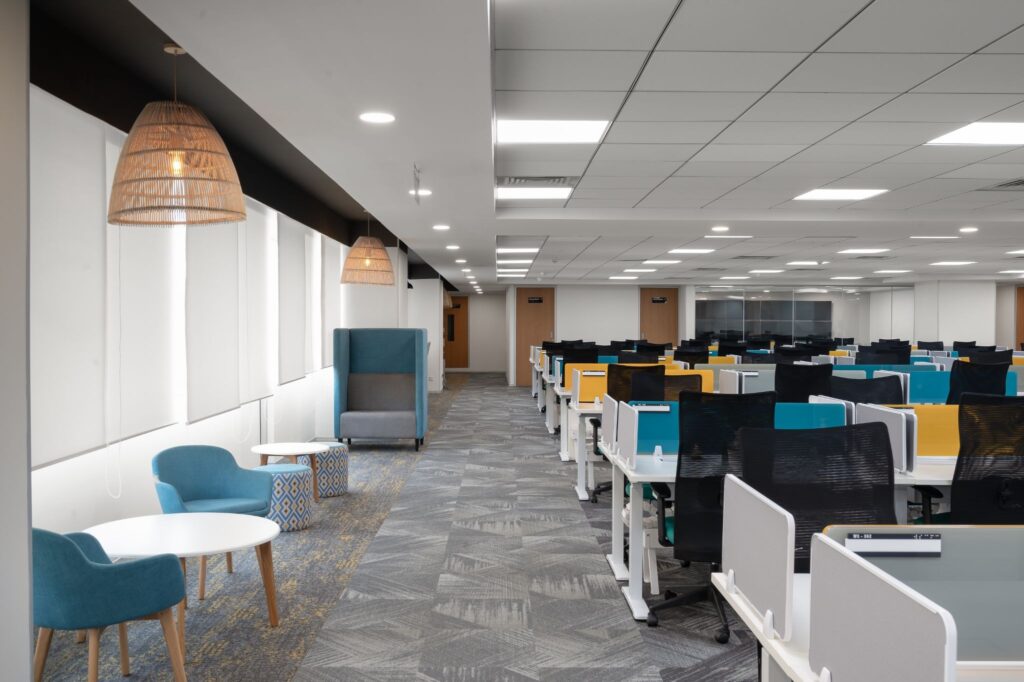
1. It Hacks Your Circadian Rhythm
Your body is a biological clock tuned to the sun. When you sit under yellow, “mood” lighting all day, your brain gets confused, thinking it’s evening and producing melatonin (the sleep hormone).
Natural White light (4000K) signals to your brain that it is daytime. This suppresses melatonin and boosts cortisol, the hormone that keeps you alert and focused. By aligning your workspace with your body’s natural rhythm, you stop fighting your biology and start working with it.
2. Say Goodbye to Digital Eye Strain
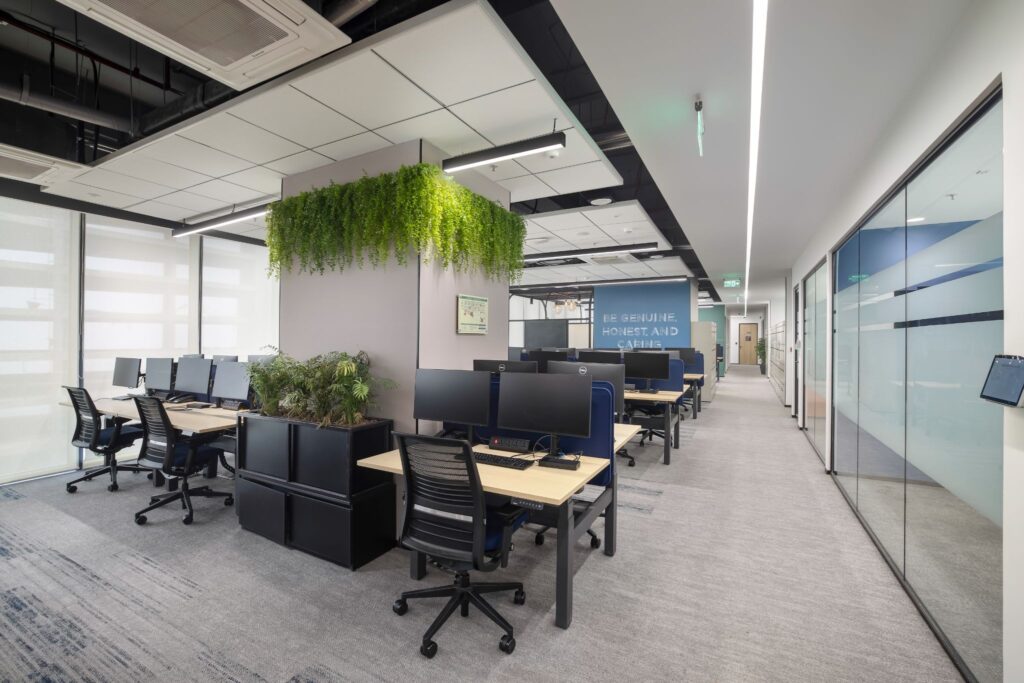
We spend hours staring at backlit screens. When your ambient office lighting is too dim or too orange, the contrast between your monitor and the room creates a massive load on your ocular muscles.
Natural White light provides the perfect level of brightness to reduce this contrast. It fills the room with a clarity that makes text on paper and pixels on screens equally easy to read, significantly reducing the “dry eye” and headaches associated with Computer Vision Syndrome.
3. Color Accuracy and Mental Clarity
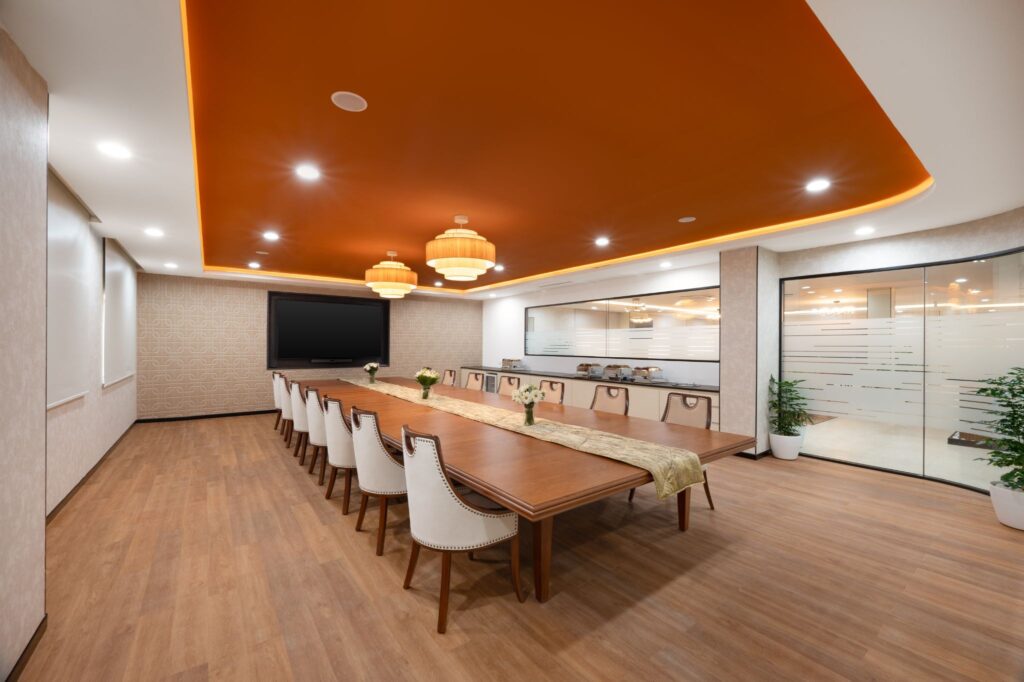
Have you ever noticed how some offices feel “heavy” or “muddy”? That’s usually bad lighting. Natural White light has a high Color Rendering Index (CRI). This means it shows colors as they truly are.
While this is vital for designers and architects, it benefits everyone. High-clarity environments reduce the “mental fog” that comes from working in a cave-like atmosphere. A bright, crisp room leads to a bright, crisp mind.
4. The Psychological Boost
Lighting isn’t just physical; it’s emotional. Poor lighting is a top contributor to Seasonal Affective Disorder (SAD) and general workplace dissatisfaction. Natural White light mimics a bright, sunny day, which triggers the release of serotonin- the “feel-good” chemical.
When you feel better, you work better. It’s that simple. Employees in well-lit environments report higher job satisfaction and lower rates of absenteeism.
5. Energy Efficiency and Modern Aesthetics
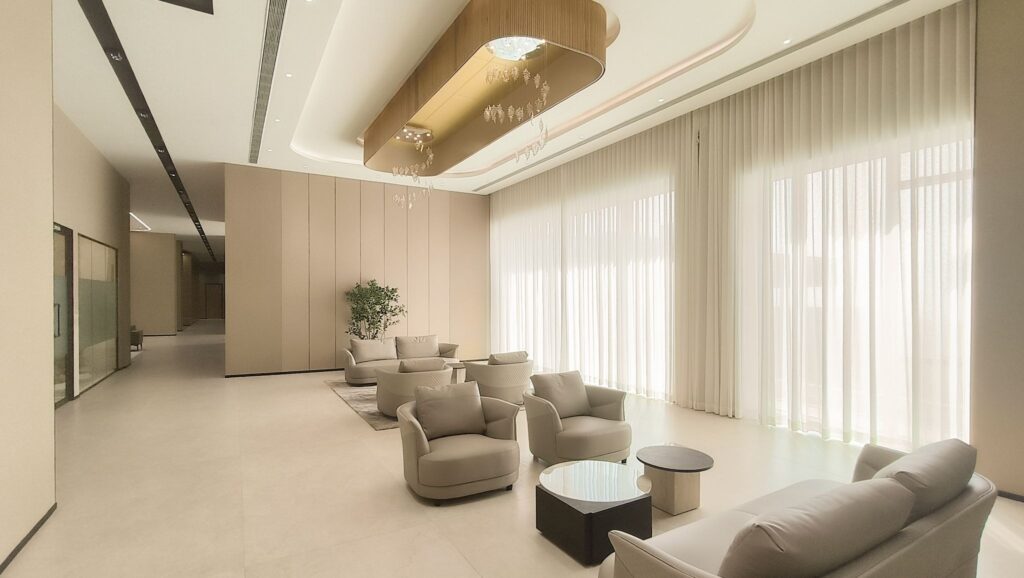
Beyond your brain, Natural White LEDs are a win for your wallet and your branding. They give any office a modern, professional, and “clean” look. Unlike old-school fluorescents, they don’t flicker (a major source of migraines) and they consume a fraction of the energy.
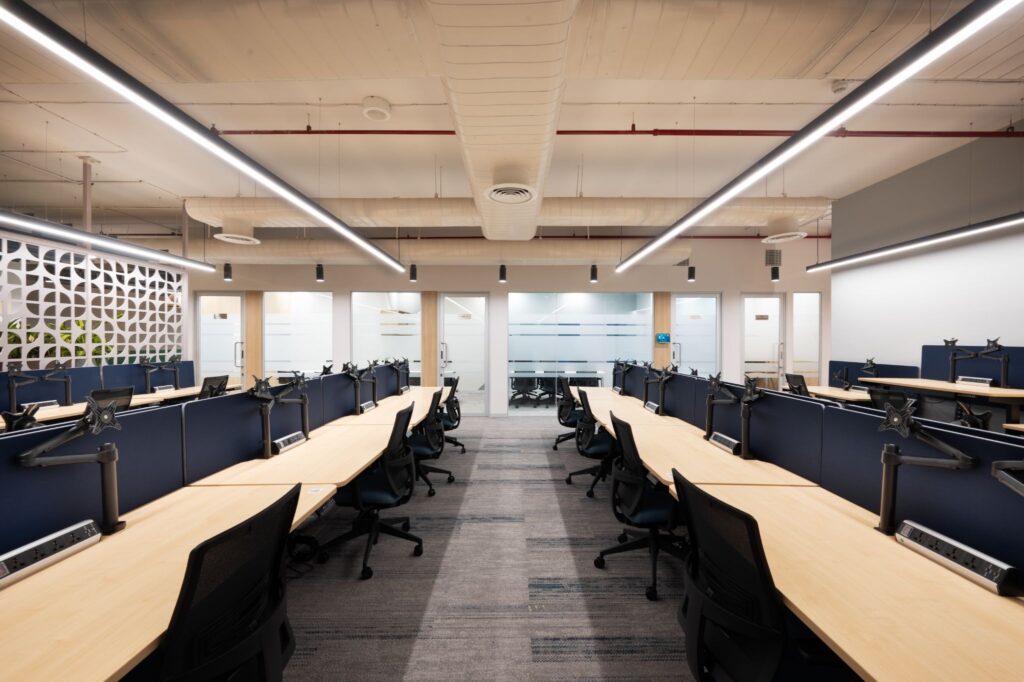
The Role of Contrast and Task Performance
It isn’t just about making the room brighter; it’s about how your brain processes details. In a “Natural White” environment, the contrast between dark text and white backgrounds is sharpened without the aggressive glare of bluer “daylight” bulbs.
This subtle optimization allows your brain to recognize patterns and process information faster. When your eyes don’t have to struggle to decode what’s on the page or screen, your cognitive load is reduced. This “saved” mental energy is then redirected toward creative problem-solving and deeper focus, allowing you to maintain a high level of task performance well into the late afternoon.
Tips to Optimize Your Workspace Lighting
If you’re ready to make the switch, here is how to do it effectively:
1. Layer Your Lighting: Don’t just rely on one overhead light. Combine Natural White ceiling panels with a dedicated desk lamp.
2. Mind the Windows: Natural White light is meant to complement sunlight, not replace it. If you have a window, keep your Natural White LEDs at a lower intensity during the brightest part of the day.
3. Check the CRI: Look for bulbs with a CRI of 80 or higher to ensure the “Natural” in Natural White is actually accurate.
4. Avoid the “Blue” Trap: While 5000K+ (Daylight) bulbs are popular, they can often lead to over-stimulation and “blue light” toxicity if used for 8+ hours. Stick to the 4000K range for the best all-day experience.
Your environment is the silent partner in your career. You can have the best ergonomic chair and the fastest laptop, but if you’re working in the dark (or under the wrong light), you’re leaving potential on the table.
Switching to Natural White light is one of the easiest, most cost-effective bio-hacks available. It clears the fog, protects your eyes, and keeps your internal clock ticking perfectly.
Ready to see your work in a whole new light?